2026-09-14
5-Point Incision Remains, Dissection Planes Evolve: 2nd Generation Dual-Plane Endoscopic Forehead Lift
Explore the 2nd generation dual-plane endoscopic forehead lift: a refined technique using dual dissection planes to protect sensory nerves and naturally elevate sagging brows with minimal incisions. Learn more from ATOP Plastic Surgery.
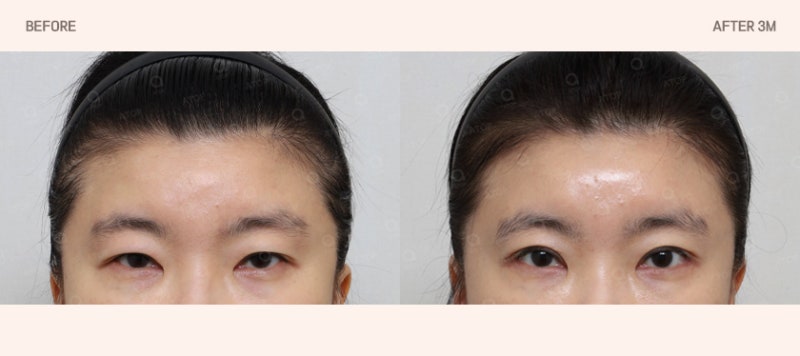
Hello. I am Dr. Jun-seong Kwon, a board-certified plastic surgeon at ATOP Plastic Surgery.
Today, we will delve into the newly upgraded 2nd generation dual-plane endoscopic forehead lift.

Forehead and glabella (frown) lines do not occur simply because the skin sags. As facial expressions are made, repetitive contractions of the muscles in the forehead and between the eyebrows deepen these creases. Over time, as tissues around the forehead and eyebrows droop, the eyes can look heavy, hooded, and tired.
In such cases, an endoscopic forehead lift can be an excellent option. Using minimal incisions, an endoscope allows the surgeon to dissect the tissues around the forehead and eyebrows and reposition them upward, elevating sagging brows and smoothing the forehead.
However, even within endoscopic forehead lifts, the surgical technique varies significantly depending on which anatomical plane is dissected and in which direction the tissue is repositioned.
Taking these factors into account, ATOP Plastic Surgery has adopted the 2nd generation dual-plane endoscopic forehead lift, an advanced method that evolves beyond the traditional single-plane dissection.
1. Why Is an Endoscopic Forehead Lift Needed?
With age, tissues around the forehead and eyebrows gradually descend under the influence of gravity and continuous muscle movement.
In particular, when the eyebrows sag, the upper eyelids hood over the double eyelid line, making the eyes appear smaller and heavier. Forehead lines and frown lines also become more pronounced, resulting in an aged, tired appearance.
In this scenario, rather than merely pulling the skin upward, it is crucial to reposition the underlying soft tissues and muscle layers surrounding the forehead and brows.
2. The 5-Point Incision Remains, but the Dissection Planes Have Evolved
The key innovation in this modern endoscopic forehead lift lies not in changing the incision sites, but in altering the surgical planes of dissection.
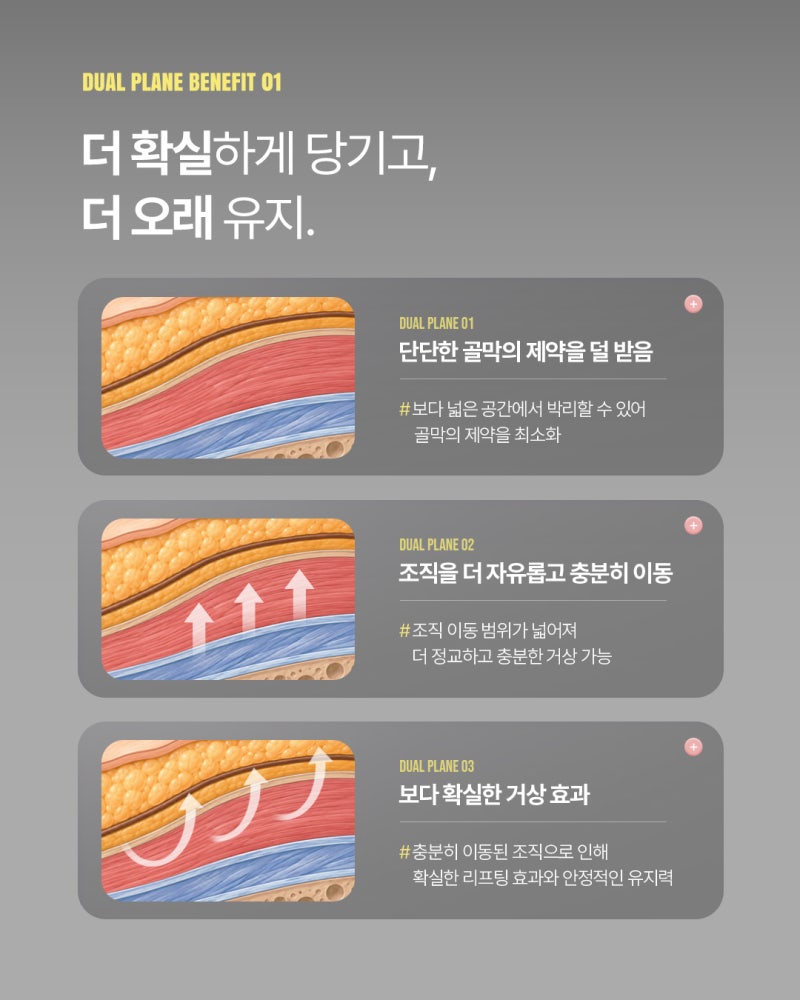
Conventional methods traditionally relied on a single subperiosteal dissection across the entire forehead between the frontal bone and periosteum through 5 small incisions. In contrast, the dual-plane approach differentiates the dissection plane depending on the specific zone of the forehead.
2nd Generation Dual-Plane Forehead Lift Dissection Method
① Upper Forehead → Subperiosteal Dissection
In the upper forehead, dissection is performed in the subperiosteal plane, just like conventional techniques. Mobilizing tissues along the space between the bone and periosteum secures an adequate range of dissection across the upper forehead, allowing effective upward repositioning.
② Lower Forehead → Subgaleal Dissection
Conversely, in the lower forehead—approximately 3 cm above the supraorbital rim (brow bone)—dissection transitions to the subgaleal plane, which is located above the periosteum.
Rather than using a single uniform plane, employing two distinct dissection planes tailored to the anatomy of the upper and lower forehead is the hallmark of the 2nd generation dual-plane endoscopic forehead lift.
In short, subperiosteal dissection for the upper region and subgaleal dissection for the lower region allow the surgeon to capitalize on the unique anatomical characteristics of each layer.
3. Why the Dual-Plane Method Helps Protect Sensory Nerves
One of the most critical anatomical structures to consider during a forehead lift is the network of sensory nerves.
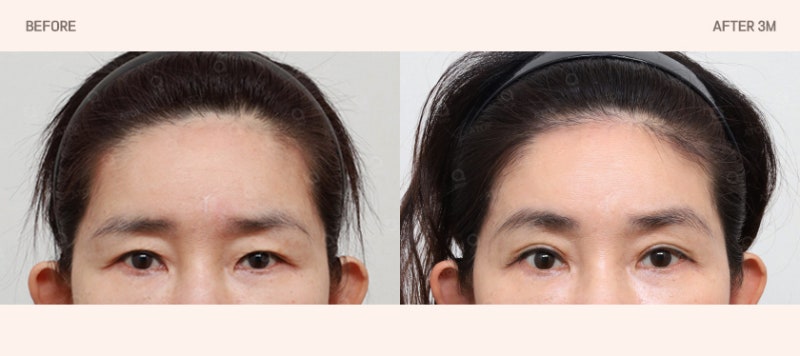
Because key sensory nerves supplying the forehead and scalp course through this area, patients can sometimes experience temporary numbness, altered sensations, or discomfort following surgery.
With conventional single-plane dissection extending all the way down to the brow, pulling the tissue upward can leave inadequate supportive tissue underneath the nerves to cushion them.
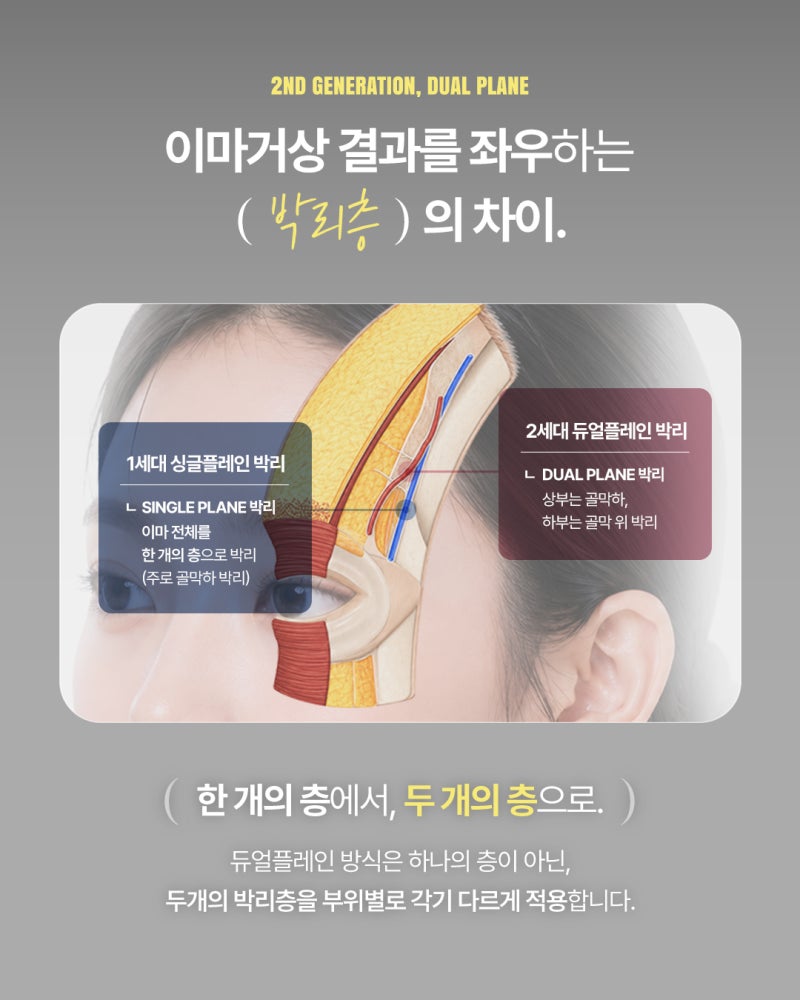
In contrast, the dual-plane technique dissects the lower forehead above the periosteum—in the subgaleal plane.
The core advantage is that the periosteum and deep soft tissues remain underneath the sensory nerves, acting as a natural protective cushion. This design helps minimize direct traction or irritation applied to the nerves, aiming to reduce post-operative numbness, sensory changes, and pain.
However, individual experiences with sensory alterations and pain vary depending on anatomical variations and surgical extent. Since absolute prevention cannot be guaranteed for every patient, an in-depth consultation with a specialist is essential before proceeding.
4. Enhanced Precision by Directly Visualizing Periorbital Soft Tissues
Another major advantage of the dual-plane method is the ability to directly visualize and release the soft tissues around the eyebrows during the procedure.
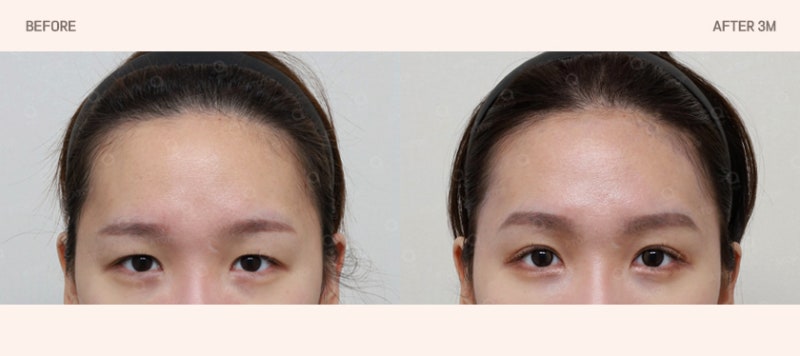
Because the sub-brow region contains various soft tissue structures, including retro-orbicularis oculi fat (ROOF), simply pulling from above without detailed release may fail to achieve the desired brow position and contour.
By approaching the lower forehead in the subgaleal plane, the surgeon can directly inspect the soft tissues around the eyebrows, release tight retaining elements, and precisely reposition the brows upward.
Furthermore, this avoids the restrictive pull of the rigid periosteum in the lower forehead, allowing the soft tissues to move much more flexibly and naturally.
As a result, rather than artificially dragging the eyebrows straight up, this technique enables a balanced lift that customizes eyebrow height, arch shape, and overall harmony between the eyes and forehead.
5. What Matters Most Is Not 'How Hard You Pull'
It is easy to assume that achieving a stronger lift requires pulling the tissues as tightly as possible.
In reality, surgical success depends not on sheer tension, but on which anatomical plane is dissected and which vital structures are preserved during mobilization. ATOP implements the 2nd generation dual-plane endoscopic forehead lift to tailor the dissection plane specifically to the distinct anatomical requirements of the upper and lower forehead.
This strategy secures sufficient mobility for a long-lasting lift while preserving the periosteal cushion beneath sensory nerves to reduce irritation, ultimately delivering a refined and natural elevation of the brow area.
An endoscopic forehead lift is far more than simply stretching forehead skin upward. It requires a profound understanding of forehead and brow anatomy and the deliberate selection of dissection planes to guide tissues into their ideal positions.
The 2nd generation dual-plane technique balances powerful lifting efficacy with nerve safety by combining subperiosteal dissection in the upper forehead with subgaleal dissection in the lower forehead.
The ultimate goal is not just an elevated brow, but a defined, durable lift with minimized nerve irritation, less discomfort, and natural facial mobility.
Because forehead sagging, skin elasticity, and facial bony structures differ for each individual, the surgical approach and extent of lifting must be personalized through a detailed diagnosis by a board-certified specialist.
Frequently Asked Questions
What is the dissection technique used in the 2nd generation dual-plane forehead lift?
It is a surgical method that utilizes two distinct dissection planes depending on the forehead zone. Dissection is performed in the subperiosteal plane in the upper forehead to ensure wide mobility, and transitions to the subgaleal plane in the lower forehead (about 3 cm above the brow bone).
How does the dual-plane method protect sensory nerves?
By dissecting the lower forehead along the subgaleal plane, the periosteum and deep soft tissues remain intact beneath the sensory nerves. This remaining layer serves as a natural protective cushion, reducing direct tension and mechanical trauma to the nerves, which helps decrease post-operative sensory changes and pain.
What are the benefits of dual-plane dissection for correcting sagging eyebrows?
It allows the surgeon to directly inspect and mobilize the soft tissues around the eyebrows without being restricted by the stiff lower periosteum. This enables flexible tissue rearrangement and precise adjustment of brow height, arch shape, and symmetry.
Does the dual-plane forehead lift completely eliminate post-operative pain or numbness?
While the procedure is specifically designed to minimize nerve irritation, complete absence of temporary numbness or discomfort cannot be universally guaranteed. Sensation changes and pain levels depend on individual healing, anatomy, and surgical scope, so an in-depth pre-operative consultation is necessary.
Does pulling the skin tighter produce better forehead lift results?
No. Pulling too forcefully can lead to an unnatural, startled expression and does not guarantee longevity. The critical factor is dissecting along the correct anatomical planes to preserve vital structures while repositioning the deep tissues naturally, achieving both durability and aesthetic balance.