2026-09-11
Functional Rhinoplasty: Why You Must Consider Both Nasal Aesthetics and Airways
Functional rhinoplasty restores comfortable nasal breathing while enhancing facial aesthetics by treating deviated septums, nasal valve stenosis, and post-fracture deformities.
Hello, this is Dr. Hanjung Lee, Head Representative Director at ATOP Plastic Surgery.
The sweltering summer has finally come to an end. This year's heat was truly intense, but as a refreshing breeze begins to blow and the holidays approach, we are profoundly grateful to see so many patients visiting our clinic.
Lately, we have received an especially large number of inquiries and surgical requests regarding rhinoplasty.
The nose sits at the very center of the face, acting as a crucial feature that defines one's overall first impression, while simultaneously serving as an essential respiratory organ.
Therefore, when considering rhinoplasty, rather than simply focusing on elevating the nasal bridge or reshaping the nasal tip, it is paramount to thoroughly evaluate the existing structural problems and breathing function of the nose together.
In particular, if your nose is crooked or you suffer from chronic nasal congestion, internal structural issues such as rhinitis, a deviated septum, or nasal valve stenosis may be the underlying cause. At ATOP Plastic Surgery, we approach functional rhinoplasty as a procedure that simultaneously resolves internal nasal conditions—including rhinitis, deviated septum, and nasal valve stenosis—while refining the aesthetic nasal contour.
At ATOP Plastic Surgery, functional rhinoplasty does not merely stop at crafting a "pretty nose." Our goal is to create a more balanced nose by addressing both its inherent respiratory function and its external appearance.
1. If your nose is crooked and frequently congested, you must check its internal structure.
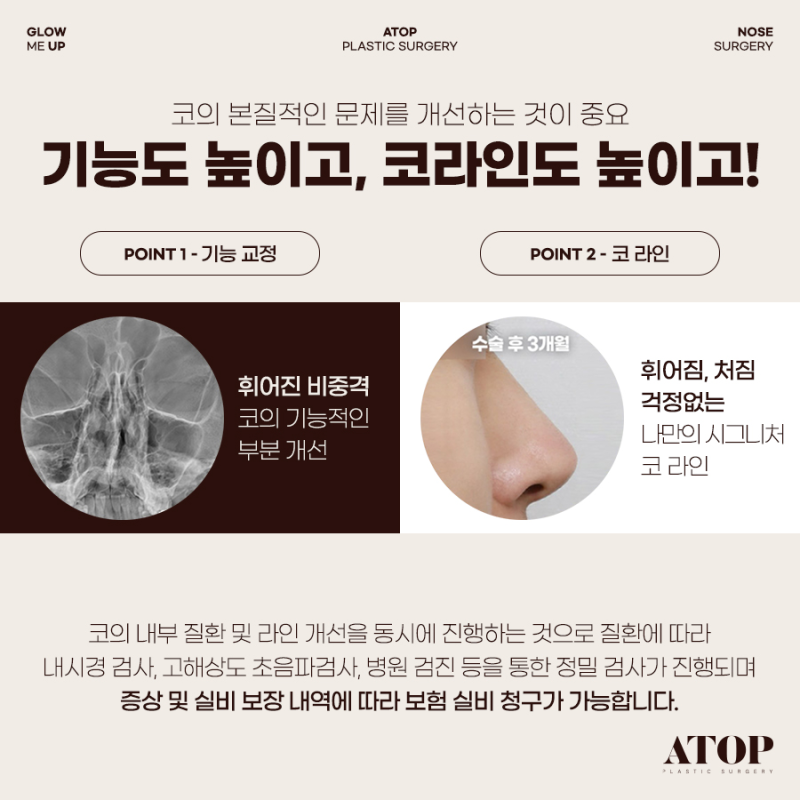
If your nose deviates to one side, your nostrils are asymmetrical, or one or both sides are chronically congested, the problem may go deeper than mere aesthetics.
Inside the nose lies the nasal septum, a partition dividing the left and right nasal cavities. When a deviated septum curves toward one side, it narrows the passage through which air flows, leading to nasal obstruction and breathing difficulties.
Furthermore, nasal valve stenosis—a narrowing of the structural supports at the entrance and internal passages of the nose—can also trigger nasal congestion.
Therefore, when planning functional rhinoplasty, it is essential to examine not only the exterior appearance of the nose, but also its internal anatomy.
ATOP Plastic Surgery recommends functional rhinoplasty for patients who experience chronic nasal congestion, mouth breathing, severe snoring, or an impaired sense of smell, as well as those who feel self-conscious about a crooked nose.
2. The core of functional rhinoplasty: 'A harmonious balance between function and aesthetics'
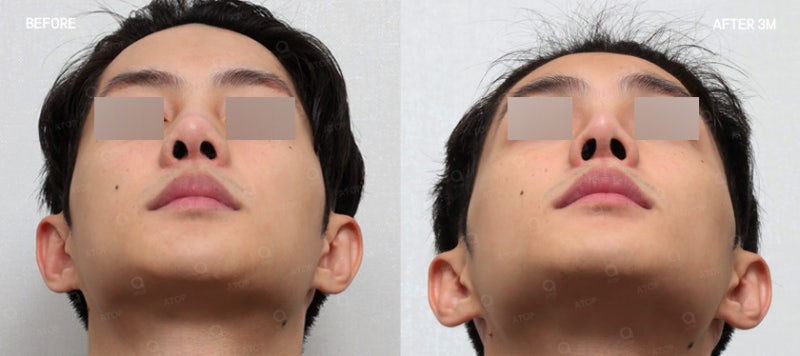
Resolving functional issues does not mean aesthetic considerations can be set aside. The patient in the photo struggled with a crooked nose caused by physical trauma. Because the septum, nasal bones, and cartilages that form the nasal framework are interconnected, any deviation or deformity in one structure inevitably compromises both the external appearance and the internal respiratory space.
For instance, when addressing a crooked nose, one must not only realign the visible midline of the nasal bridge, but also simultaneously inspect the septum's condition, the internal volume of both nasal passages, and the support structures of the nasal tip.
Accordingly, functional rhinoplasty must avoid merely elevating or straightening the nose; identifying underlying structural issues and simultaneously planning for both functional and aesthetic outcomes is critical.
Because even subtle modifications to the nose can transform the entire facial harmony, rhinoplasty designs should not isolate the bridge and tip. Instead, they must take into account the overall facial balance extending from the forehead down to the nose, philtrum, and chin.
3. A crooked nose following a nasal fracture? It might not be a purely aesthetic issue.
The nasal bones are among the most frequently injured facial structures due to physical trauma.
Following an impact from a car accident, sports injury, or a fall, the nose can deviate to one side, the contour of the bridge may change, and nasal breathing can become noticeably more difficult than before.
Because a nasal bone fracture can involve not only visible external deformities but also septal injury or deviation, ongoing nasal congestion or persistent crookedness after a fracture warrants a comprehensive check of the internal nasal anatomy. Clinical studies report that when nasal fractures are accompanied by septal trauma, persistent deformity and chronic nasal congestion frequently follow.
Therefore, anyone with a history of a broken nose should look beyond the simple fact that their "nose looks crooked" and thoroughly evaluate:
- Which direction the nose deviates
- Whether the nasal septum is also deviated
- If there is an asymmetry in airway volume between the left and right nasal cavities
- Whether nasal obstruction or breathing discomfort is present
- If there were pre-existing morphological issues prior to the trauma
Conducting an integrated, comprehensive assessment of these points is vital.
4. For nasal fractures, 'when treatment is administered' is equally crucial.
The treatment approach for a nasal fracture varies depending on when the injury occurred.
Immediately after trauma, swelling often makes it difficult to assess the true extent of the nasal deformity accurately. Thus, a reassessment is typically performed once the swelling has subsided to a degree. For simple fractures, closed reduction can be considered in the relatively early period following the trauma. However, if considerable time has passed, the bones have consolidated, or severe septal deviation remains, a more complex reconstructive procedure may be required.
In particular, if the deviation has become fixed over time and chronic nasal congestion persists, simply repositioning the nasal bones will not suffice. It becomes necessary to comprehensively realign the septum, restore the supportive nasal framework, and reopen the airway passages.
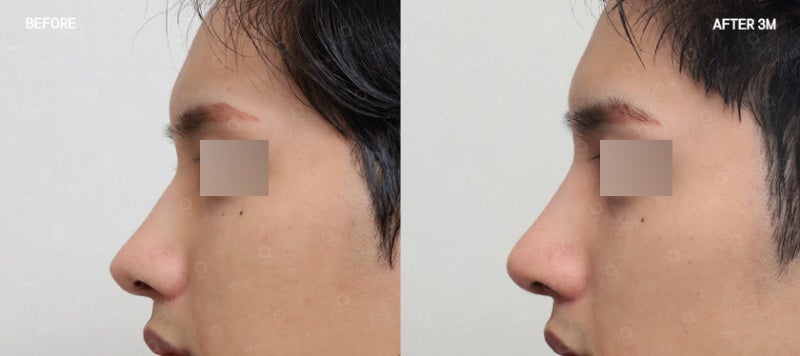
Consequently, if you notice alterations in nasal shape or breathing after a nasal fracture, it is vital to determine the optimal timing and surgical method through an accurate assessment of your current condition.
5. Why 3D-CT is essential for three-dimensional imaging of nasal bones and cartilage
In functional rhinoplasty, a surgical plan cannot rely solely on the external appearance of the nose.
Beneath the skin, nasal bones, multiple cartilage frameworks, and the septum are intricately connected.
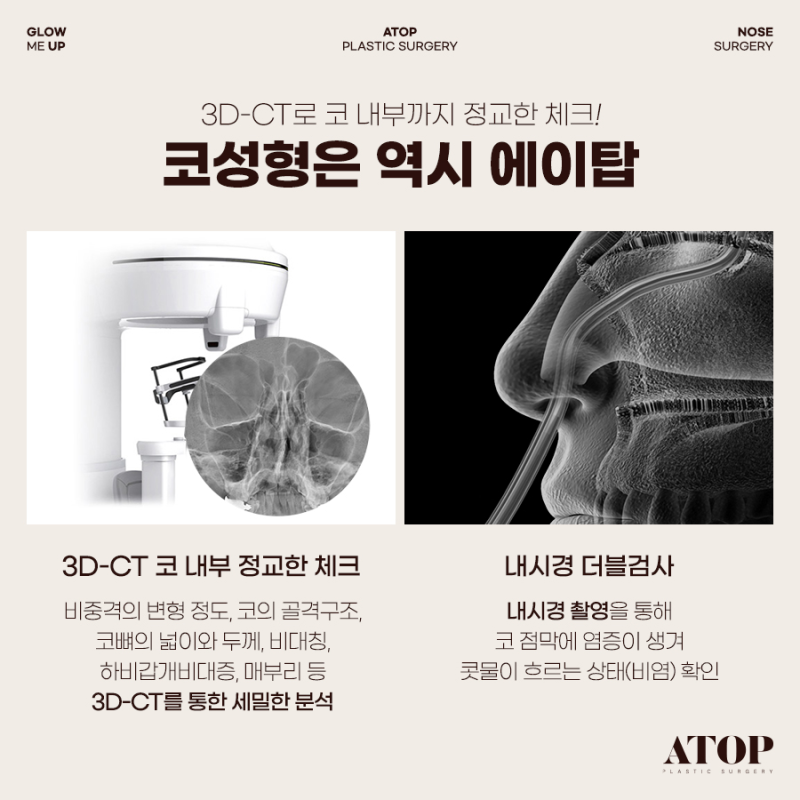
At ATOP Plastic Surgery, we utilize 3D-CT imaging to examine the state of the nasal cartilage, subcutaneous tissue, and the exact thickness and position of the bones, using this data to establish a meticulous surgical plan.
Especially in cases where the nose is deviated or there is a history of nasal fracture, evaluating the position of the nasal bones and septum alongside any bilateral asymmetry—in addition to visible external deviations—is invaluable for surgical planning.
When necessary, customized implant designs tailored to the patient's individual nasal bone and cartilage architecture can be utilized. ATOP Plastic Surgery provides a 3D customized implant fabrication system based on 3D-CT analysis that accurately accounts for nasal curvature, length, and height.
6. Functional rhinoplasty: Natural balance matters more than simply creating a 'pretty nose.'
An excessively high nasal bridge does not suit everyone in rhinoplasty.
Creating a natural profile that considers the individual's facial skeletal structure, facial features, nasal length and width, and the proportions between the bridge and tip is essential.
Especially when functional issues coexist, rather than focusing exclusively on aesthetic refinement, one must use 3D-CT to identify airway-related structural problems and design aesthetic enhancements while stably preserving the nasal structural support.
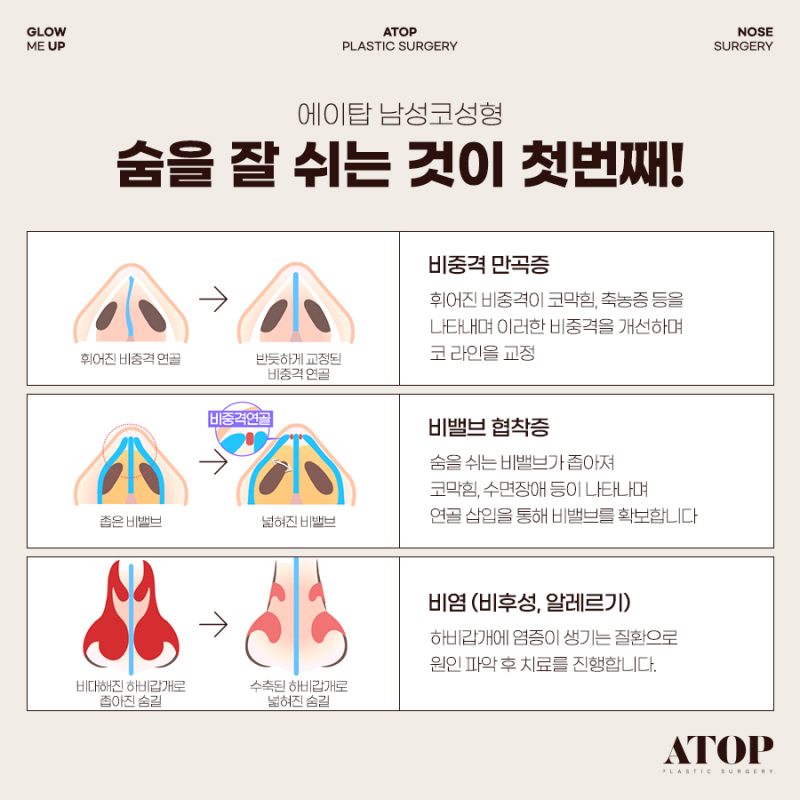
At ATOP Plastic Surgery, we strive to harmonize function and aesthetics by analyzing nasal bones and cartilages, checking for asymmetry via 3D-CT, and offering implants customized to the patient's anatomical contours.
[When to consider functional rhinoplasty]
✔ Chronic nasal congestion or difficulty breathing through one nostril
✔ A diagnosis of rhinitis or a deviated septum
✔ A crooked nose and noticeable aesthetic asymmetry
✔ A past history of nasal bone fracture or nasal trauma
✔ Persistent nasal obstruction or shape changes following a nasal fracture
✔ A desire to improve both nasal breathing function and cosmetic appearance simultaneously
However, experiencing these symptoms does not automatically mean surgery is required. Nasal obstruction can stem from various causes beyond a deviated septum, such as rhinitis, turbinate hypertrophy, or nasal valve collapse. Identifying the exact underlying cause first is therefore an essential step.
Conclusion
The nose sits at the center of the face while serving as a vital respiratory organ.
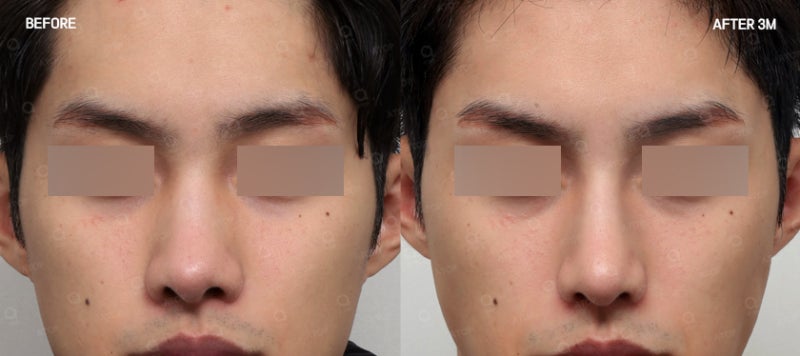
Particularly if your nose is crooked or you have experienced a past nasal fracture, you should avoid evaluating the issue solely based on external shape; examining the nasal bones, septum, cartilages, and internal nasal cavities collectively is paramount.
Functional rhinoplasty is not merely a procedure to alter the shape of the nose. It requires identifying the individual's anatomical structures and functional problems, followed by crafting a surgical plan that integrates cosmetic refinement.
Therefore, if you suffer from nasal congestion, breathing discomfort, a crooked nose, or post-traumatic nasal deformities, obtaining an accurate diagnosis to identify the root causes of both functional and aesthetic issues is the critical first step toward selecting the right treatment.
Because nasal appearance and function are inextricably linked, finding the optimal balance between a "beautiful nose" and a "comfortable airway" is the single most important objective in functional rhinoplasty.
I hope this information has been helpful. Next time, I will cover arm liposuction—a common area of concern for many women seeking body contouring.
Thank you.
Frequently Asked Questions
When is functional rhinoplasty recommended?
It is recommended when respiratory discomfort, such as chronic nasal congestion, coincides with cosmetic concerns. If you experience frequent nasal obstruction, mouth breathing, severe snoring, or have been diagnosed with rhinitis or a deviated septum—or if you have a crooked, asymmetrical nose—functional rhinoplasty is a suitable solution.
Can a past nasal fracture cause chronic nasal congestion?
Yes. If a nasal bone fracture causes concomitant damage or deviation to the internal nasal septum, chronic nasal congestion can occur. Fractures often involve internal septal injury in addition to visible deformities, narrowing the airway and resulting in prolonged breathing difficulties.
When should a nasal bone fracture be treated?
The timing depends on a precise evaluation of the nose once initial post-traumatic swelling has subsided. While simple fractures can be addressed early with closed reduction, delayed cases where bones have set or severe septal deviation has fixed require comprehensive corrective surgery to restore both the structural framework and the airway.
Why is a 3D-CT scan necessary before functional rhinoplasty?
A 3D-CT scan allows surgeons to analyze the nasal bones, cartilages, and asymmetries beneath the skin in high-precision three dimensions. It accurately reveals bone thickness, anatomical positioning, and septal deviations, which is vital for designing customized implants and establishing a safe, effective surgical plan.